How Does Automated Expense Categorization Software Improve Business Bookkeeping


When transactions are reviewed and categorized manually, businesses spend hours assigning expense codes, verifying entries, and correcting classification errors. As transaction volumes grow, this process creates delays in reconciliation, slows financial reporting, and increases the likelihood of mistakes that affect bookkeeping accuracy.
Automated expense categorization software helps businesses process transactions faster while maintaining consistent financial records. Instead of manually coding each transaction, these systems use machine learning models and intelligent transaction rules to recognize merchants, classify expenses, and organize financial data automatically.
What Is Automated Expense Categorization Software
Automated expense categorization software classifies business transactions into predefined accounting categories without manual input. Instead of reviewing every transaction individually, finance teams rely on systems that analyze transaction details, recognize spending patterns, and assign categories automatically. This helps maintain consistent financial records and reduces the workload associated with routine bookkeeping.

Modern accounting platforms use a combination of rule-based systems and machine learning models to classify transactions accurately. These systems analyze merchant names, transaction descriptions, historical categorizations, and company-defined rules to determine the correct expense category. As more transactions are processed, the system improves its classification accuracy and maintains standardized financial data across the organization.
Automated expense categorization works by identifying patterns within transaction data and mapping those transactions to accounting categories such as travel, software subscriptions, or office expenses. Instead of relying on manual coding, the system applies predefined rules and learned patterns to classify expenses automatically.
Key capabilities of automated categorization systems include:
- Automatic classification of business transactions
- Intelligent transaction recognition based on merchant data
- Continuous learning from historical categorization
- Automatic mapping to accounting categories in the ledger
Traditional bookkeeping requires finance teams to manually assign categories to each transaction. As transaction volume increases, this approach becomes time-consuming and difficult to scale. Automated categorization replaces this manual effort with intelligent systems that process and classify transactions instantly.
How Automated Expense Categorization Technology Works
Automated expense categorization systems process financial transactions using a structured pipeline that captures data, analyzes transaction signals, and assigns accounting categories automatically.
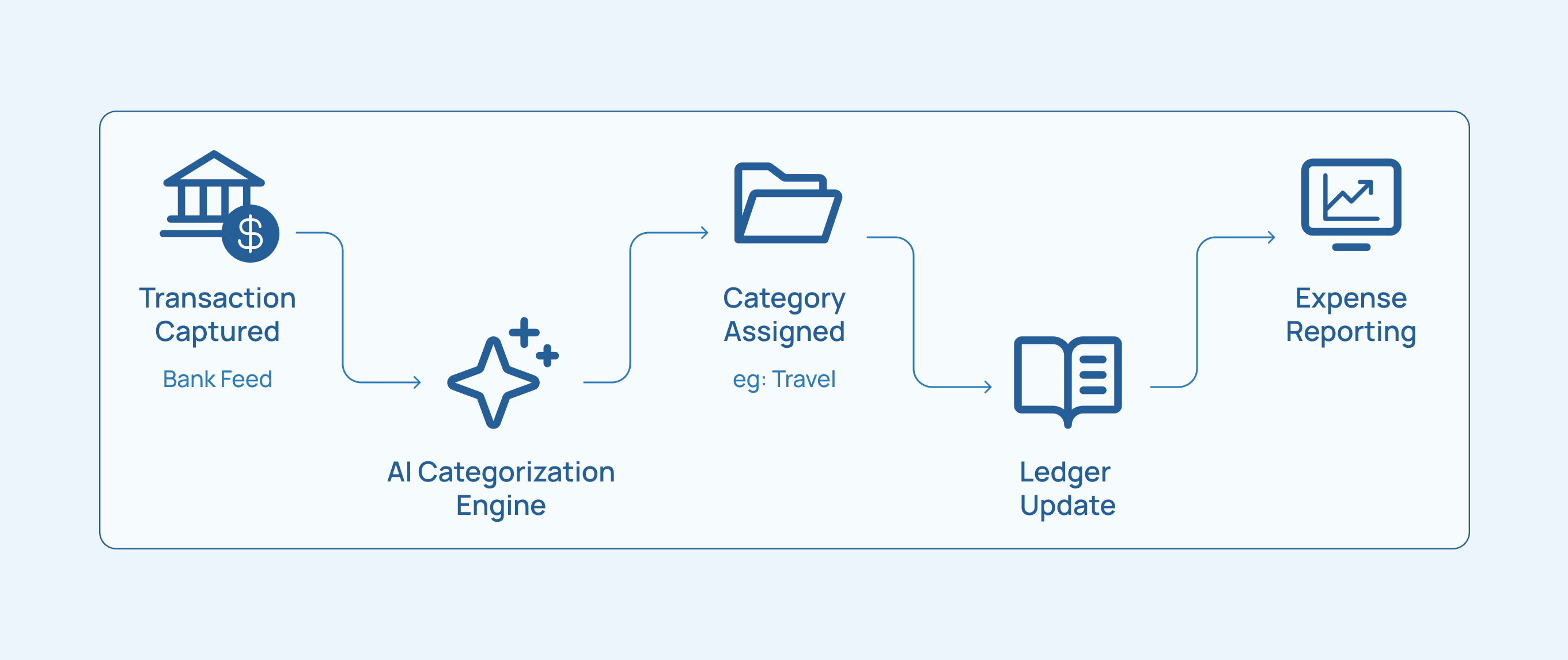
Instead of waiting for manual review, these systems evaluate transaction metadata in real time and apply classification models or rules to determine the correct category. This approach helps businesses maintain continuously updated financial records while reducing bookkeeping workload.
i) Transaction Data Capture and Processing
The first step in automated categorization is collecting transaction data from financial sources and preparing it for analysis. Modern accounting systems connect directly with payment instruments and banking infrastructure to receive transaction details as they occur.
Key processing steps include:
- Capture transaction data from business cards, bank accounts, and financial feeds
- Extract merchant information, payment references, and transaction metadata
- Standardize transaction details before classification begins
This preprocessing step ensures the system receives structured information that can be analyzed consistently.
ii) Machine Learning Transaction Categorization
After transaction data is captured, the categorization engine analyzes multiple signals to determine the appropriate accounting category. Machine learning models evaluate patterns across historical transactions and merchant characteristics to classify expenses accurately.
These systems rely on past categorization patterns and rule-based logic defined by finance teams. Over time, the model becomes better at recognizing recurring transactions such as subscriptions, travel expenses, or software purchases.
Common signals used during classification include:
- Merchant name and merchant category patterns
- Historical classifications of similar transactions
- Expense rules defined by finance teams
By combining pattern recognition with rule-based logic, the system can assign categories with high consistency.
iii) Real-Time Expense Processing
Once transactions are categorized, the system immediately updates financial records within the accounting system. This continuous processing ensures financial data remains current rather than waiting for manual updates during month-end reconciliation.
Benefits of real-time processing include:
- Immediate transaction categorization as spending occurs
- Continuous updates to financial records and ledgers
- Faster month-end closing and reconciliation cycles
Key Benefits of Automating Business Expense Categorization
Automating expense categorization changes how finance teams manage bookkeeping operations. Instead of reviewing every transaction manually, businesses can rely on systems that classify expenses instantly and maintain consistent financial records. This improves bookkeeping accuracy while freeing finance teams to focus on financial planning, analysis, and reporting.
i) Improved Accuracy and Reduced Human Error
Manual expense coding often leads to inconsistent categorization, duplicate entries, or incorrect account mapping. Automated categorization applies consistent classification logic across all transactions, which improves record reliability.
Key improvements include:
- Consistent categorization rules applied across transactions
- Reduced duplicate or misclassified expense entries
- Fewer manual coding mistakes in accounting records
- Standardized financial records across departments
ii) Significant Time Savings for Finance Teams
Finance teams spend a large portion of their time reviewing transaction logs and assigning expense codes. Automation removes much of this repetitive work and speeds up financial operations.
Examples include:
- Less time spent reviewing and categorizing individual transactions
- Faster reconciliation between bank feeds and accounting systems
- Reduced administrative workload for bookkeeping teams
iii) Real-Time Financial Visibility
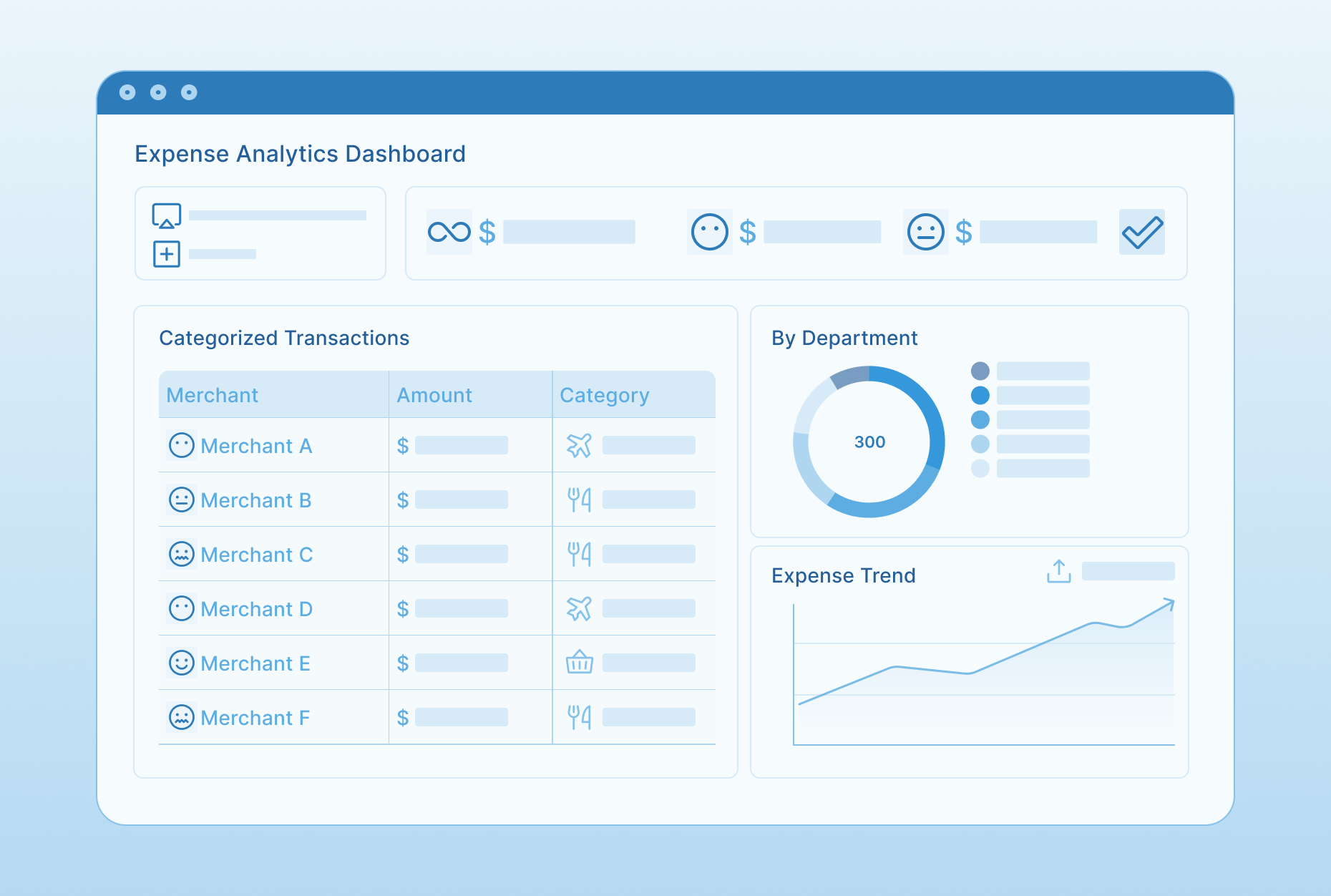
When expenses are categorized automatically, financial records update continuously. This allows finance leaders to monitor spending patterns and track operational costs more accurately.
Benefits include:
- Up-to-date expense dashboards for finance teams
- Immediate tracking of company spending across categories
- Faster financial decision making based on current data
iv) Scalable Expense Management for Growing Companies
As businesses scale, transaction volumes increase significantly. Manual bookkeeping processes struggle to keep up with this growth. Automated categorization allows companies to manage large transaction volumes without expanding finance operations at the same pace.
Automation supports scalability by:
- Processing thousands of transactions without manual review
- Maintaining consistent financial records across large data sets
- Supporting growth without increasing bookkeeping workload
Advanced Features of AI-Powered Expense Management Tools
AI-powered expense management tools include capabilities that go beyond simple transaction categorization. These systems combine intelligent classification, policy enforcement, and financial analytics to help finance teams maintain accurate records while monitoring company spending. Instead of relying on manual review, businesses can manage expenses through automated workflows that keep financial data organized and continuously updated.
i) Automatic Transaction Categorization
Automatic transaction categorization allows accounting systems to assign expense categories without manual intervention. The system analyzes merchant information, transaction descriptions, and historical classifications to determine the correct accounting category. As the platform processes more transactions, it learns recurring spending patterns such as subscriptions, travel expenses, and software payments. This improves consistency across financial records and reduces the need for repeated manual review.
ii) Intelligent Expense Policy Enforcement
AI-powered expense tools can enforce internal spending policies automatically while processing transactions. The system evaluates transactions against predefined company policies and identifies expenses that fall outside permitted spending limits or merchant categories. When unusual or non-compliant expenses appear, the system flags them for review. This helps finance teams maintain spending discipline and ensures company expense policies are applied consistently.
iii) Automatic General Ledger Coding
Advanced expense automation tools map transactions directly to the appropriate general ledger accounts. Once a transaction is categorized, the system automatically assigns the correct expense account, cost center, and department allocation within the accounting structure. This removes a major manual step in bookkeeping and ensures financial records remain structured and consistent across departments and reporting periods.
iv) Multi-Currency Expense Handling
Companies operating internationally often process transactions in multiple currencies. Modern expense management systems can categorize these transactions while converting them into the company’s base currency for accounting purposes. This allows businesses to track spending across regions without creating fragmented financial records. Multi currency support is particularly important for global teams that manage expenses across different markets and tax environments.
v) Real-Time Expense Analytics and Reporting
AI-powered expense platforms also provide reporting dashboards that help finance teams analyze spending patterns. As transactions are categorized automatically, financial data becomes available for reporting in real time. Finance leaders can monitor expense trends, track departmental spending, and identify cost patterns without waiting for month end reporting cycles. This improves financial visibility and helps businesses make faster budgeting and operational decisions.
Ensuring Accuracy in Automated Expense Categorization
Automated categorization improves speed and efficiency, but accuracy remains critical for reliable financial records. Modern expense systems combine automation with validation mechanisms that detect anomalies, flag uncertain classifications, and allow finance teams to review exceptions. This balance between automation and oversight ensures that bookkeeping remains both efficient and trustworthy.
i) Error Detection and Exception Handling
Automated expense systems continuously evaluate transactions to identify entries that may require human review. When the system encounters unusual merchant data, unclear transaction descriptions, or patterns that do not match existing rules, it flags those transactions as exceptions. Finance teams can then review these entries, confirm the correct category, or adjust classification rules. This process prevents incorrect categorizations from entering financial records while maintaining the speed benefits of automation.
ii) Human Review and Approval Workflows
Even with advanced automation, finance teams retain control over the final classification of transactions. Approval workflows allow accountants or finance managers to review flagged transactions before they are finalized in the ledger. These workflows help validate automated decisions, particularly for high-value transactions or expenses that fall outside normal spending patterns.
iii) Continuous Learning and Model Improvement
Automated categorization systems improve over time by learning from corrections and historical transaction data. When finance teams adjust or confirm a transaction category, the system records that decision and applies the same logic to similar transactions in the future. This continuous learning process increases classification accuracy as the system processes more financial data. Over time, fewer transactions require manual review, and the categorization engine becomes more reliable for everyday bookkeeping operations.
Automated Expense Categorization for Tax Compliance and Audit Readiness
Expense categorization is not only a bookkeeping task. It directly affects tax reporting, financial transparency, and regulatory compliance. When businesses categorize expenses inconsistently, tax calculations become unreliable, and financial audits take longer. Automated categorization systems help maintain structured financial records so transactions remain traceable and properly classified across reporting periods.
By organizing financial data at the moment transactions occur, automated systems reduce the risk of missing documentation, incorrect tax classifications, or incomplete audit trails. This allows finance teams to maintain accurate records without adding additional manual review work.
i) Organized Digital Financial Records
Automated categorization systems maintain structured digital records for every transaction processed within the accounting system. Each expense is stored with merchant information, timestamps, payment references, and the assigned accounting category. This structured recordkeeping makes it easier for finance teams to review spending patterns and retrieve financial data when needed.
When financial information is stored in a consistent format, businesses can generate financial reports faster and maintain well-organized documentation for accounting reviews or compliance checks.
ii) Accurate Expense Categorization for Tax Reporting
Correct expense classification plays an important role during tax preparation. Businesses must assign transactions to the appropriate expense categories to determine deductible costs and prepare accurate financial statements. When expenses are categorized automatically using consistent rules, the risk of incorrect tax classifications decreases significantly.
Automation also ensures that transactions are categorized consistently across reporting periods. This consistency helps finance teams generate tax reports with fewer adjustments and reduces the likelihood of errors that could affect filings.
iii) Reliable Audit Trails for Financial Transparency
Financial audits require clear documentation that shows how transactions were recorded and categorized over time. Automated categorization systems maintain a history of each transaction, including when it was recorded and how it was classified. This creates a transparent audit trail that auditors can review without requiring extensive manual documentation.
Because categorization decisions are recorded within the system, finance teams can easily explain how expenses were classified and verify the accuracy of financial records during an audit. This improves financial transparency and makes audit preparation far more manageable for growing businesses.
Why Businesses Use Inkle for Automated Expense Categorization
Managing expenses becomes increasingly complex as businesses grow and operate across multiple payment channels, entities, and jurisdictions. Automated categorization helps reduce manual bookkeeping work, but companies also need systems that keep financial records structured and compliant. Inkle helps businesses automate expense categorization while maintaining organized bookkeeping workflows and reliable financial documentation.
Instead of relying on fragmented tools and manual review, finance teams can use a unified platform that processes transactions, classifies expenses, and maintains structured financial records in one place. This helps startups and growing companies keep their books clean, generate accurate financial reports, and stay prepared for tax reporting and financial audits.
Key Inkle capabilities include:
- Automated classification of transactions into accounting categories
- Integrated bookkeeping workflows that maintain structured financial records
- Support for companies operating across the United States and India
- Financial records organized for reporting, compliance, and audits
Automating expense categorization helps businesses reduce manual bookkeeping work and maintain accurate financial records. Inkle helps growing companies automate transaction classification, maintain compliant books, and manage financial operations across jurisdictions.
If you want to simplify bookkeeping and expense tracking, book a demo with Inkle to see how automated categorization can streamline your financial workflows.
Frequently Asked Questions
What is automated expense categorization software
Automated expense categorization software classifies business transactions into predefined accounting categories without manual input. The system analyzes transaction details such as merchant names, payment descriptions, and historical classifications to assign the correct expense category automatically.
How does automated expense categorization improve bookkeeping
Automated categorization reduces manual data entry and applies consistent classification rules across transactions. This improves bookkeeping accuracy, reduces reconciliation errors, and ensures financial records remain organized for reporting and analysis.
Can automated systems handle large transaction volumes
Yes. Automated expense categorization systems are designed to process high volumes of transactions efficiently. They can categorize thousands of transactions quickly, making them suitable for growing companies that process frequent payments and expenses.
How does automated categorization support tax compliance
Consistent expense categorization helps maintain accurate financial records for tax reporting. When transactions are classified correctly, businesses can generate reliable financial statements and identify tax-deductible expenses more easily during tax preparation.
Why is real-time expense tracking important for businesses
Real-time expense tracking allows finance teams to monitor spending as transactions occur. This improves financial visibility, helps businesses track budgets, and enables faster financial decision-making based on up-to-date expense data.
How does Inkle help businesses manage expense categorization
Inkle automates transaction classification within bookkeeping workflows and maintains structured financial records for reporting and compliance. The platform helps companies manage expenses efficiently while supporting financial operations across multiple jurisdictions.
In this article


.png)